
Over the past decade, Scotland has witnessed a remarkable increase in people seeking ADHD assessments, receiving diagnoses and accessing treatment. But behind the statistics are thousands of ordinary Scots who have spent years wondering why life sometimes feels harder than it should.
A Decade That Changed the Conversation
Ten years ago, ADHD was still widely associated with children who struggled to sit still in classrooms. Adults rarely appeared in everyday conversations about the condition, and many people who had spent their lives struggling with attention, organisation or impulsivity had never considered that ADHD might explain their experiences.
The Rise of ADHD in Scotland: What’s Happening in Glasgow, Edinburgh and Ayr?
Today, the conversation sounds very different. In Glasgow, adults are asking questions about difficulties they’ve lived with for decades. Across Edinburgh and the Lothians, increasing numbers of people are seeking neurodevelopmental assessments. In Ayrshire, families are confronting the reality of lengthy waiting lists and limited access to specialist services. The numbers are striking. But there’s a crucial distinction between an increase in people living with ADHD and an increase in people finally being recognised, assessed or treated. The evidence strongly supports a substantial rise in recognition and demand for services. It does not establish that the underlying proportion of Scotland’s population with ADHD has increased by anything like the same amount.
What the Scottish Statistics Actually Show
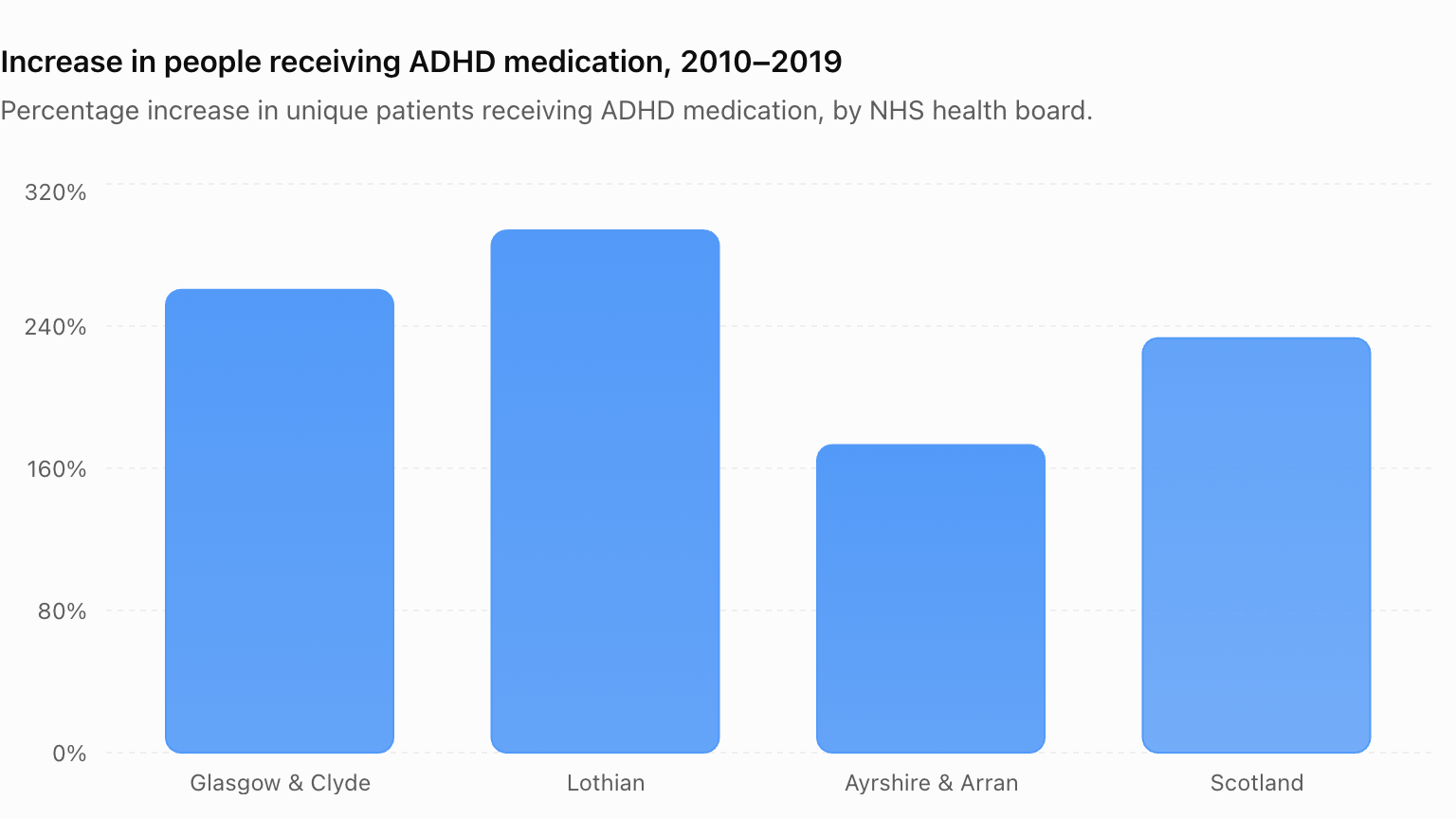
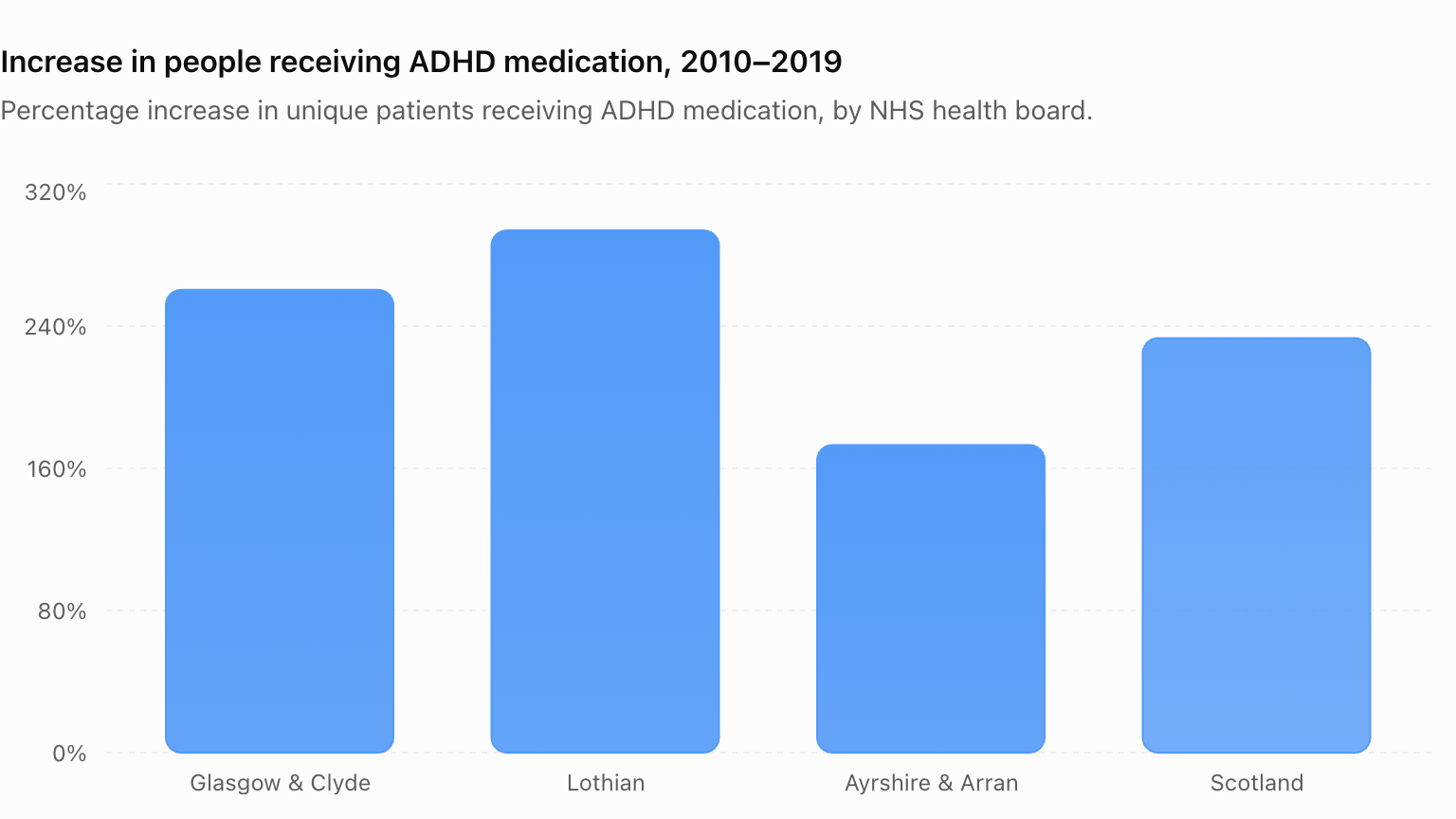
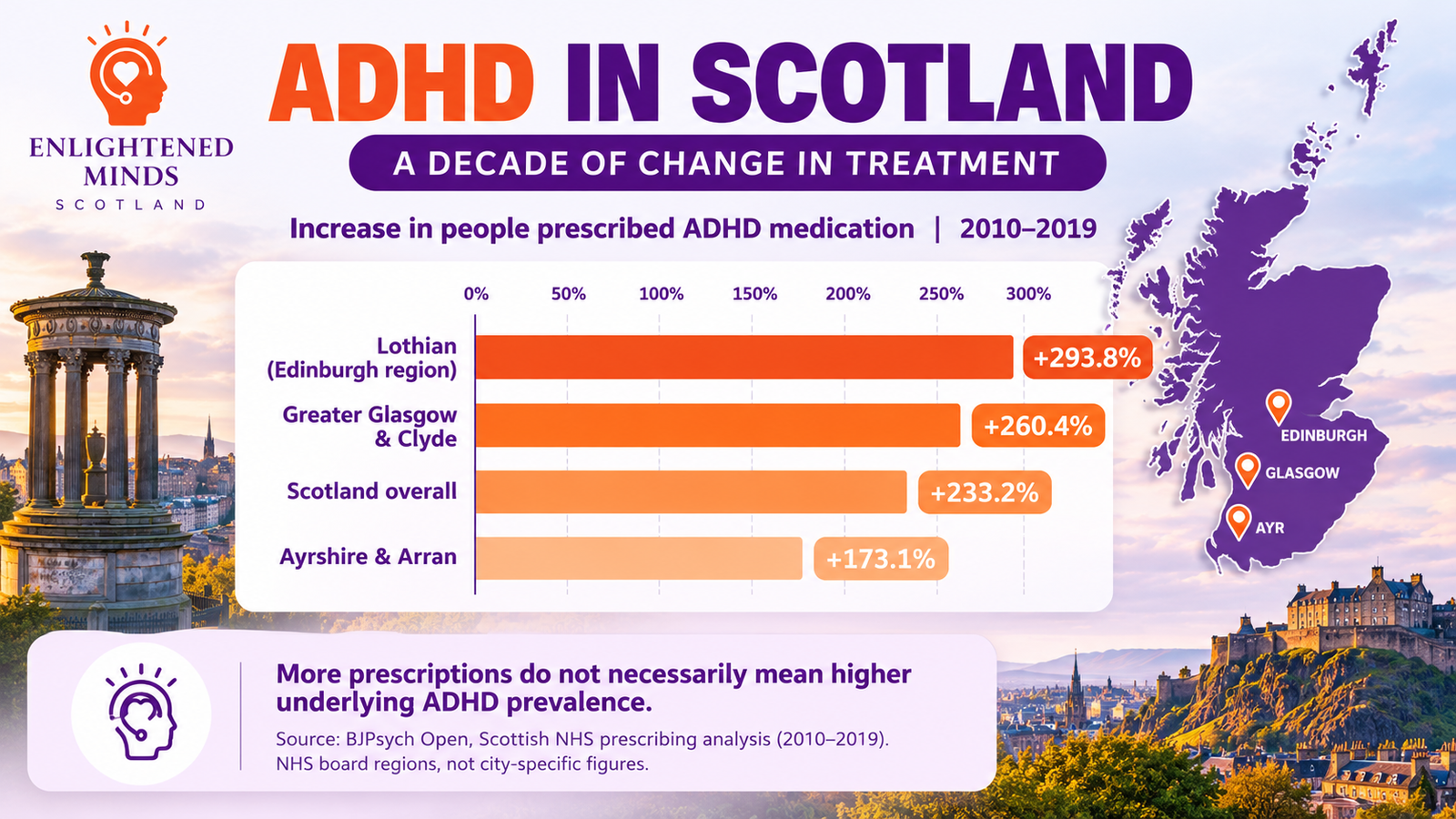
A peer-reviewed analysis of NHS prescribing between 2010 and 2019 found that the number of people receiving medication typically used for ADHD increased by 233.2% across Scotland. The increases varied substantially between health boards, suggesting that access to diagnosis, prescribing practices and service development all influence the picture.
| Area | Increase in Patients Prescribed ADHD Medication | Reporting Period |
|---|---|---|
| Greater Glasgow & Clyde | +260.4% | 2010–2019 |
| Lothian (Edinburgh region) | +293.8% | 2010–2019 |
| Ayrshire & Arran | +173.1% | 2010–2019 |
| Scotland overall | +233.2% | 2010–2019 |
Source: Peer-reviewed Scottish ADHD prescribing analysis. These figures measure changes in people receiving medication, not changes in ADHD prevalence or the total number of diagnoses. Health board boundaries are wider than individual cities.
These figures tell us that treatment has become more common, but they also raise a question: how many people were living with ADHD before these increases, without ever receiving an assessment or appropriate support?
Glasgow: A Remarkable Rise in Adult Referrals
In Greater Glasgow and Clyde, the pressure on adult ADHD services has been particularly pronounced. Scottish Government reporting described an increase of more than 1,000% in adult ADHD assessment referrals over a three-year period around 2020–2023. A dedicated waiting-list initiative introduced in 2021 also contributed to a reported increase of more than 800% in recorded adult ADHD diagnoses over approximately three years.
These figures reflect rapid changes in service activity and recognition. They do not mean that the underlying number of people with ADHD suddenly multiplied tenfold. More recent information illustrates the scale of unmet demand. Freedom of Information responses published in 2026 reported 8,886 people waiting for adult ADHD assessment across Greater Glasgow and Clyde in July 2026. Within Glasgow City itself, 4,907 people were waiting, with a reported median wait of 139 weeks among those on the list. For the people represented by those figures, waiting is not an abstract healthcare statistic. It may mean struggling through another year at work, another difficult academic term or another period of wondering whether there is an explanation for challenges that have followed them since childhood.
Edinburgh and the Lothians: Recognition Has Grown, but So Has Demand
The Lothian region recorded a 293.8% increase in people receiving ADHD medication between 2010 and 2019, exceeding the national increase over the same period.
NHS Lothian has developed neurodevelopmental assessment pathways over many years. Scottish Government research found that a substantial proportion of people referred for neurodevelopmental assessment had previously been known to community mental health services without having received a relevant diagnosis. That finding is significant. It suggests that some people seeking answers today may not be entirely new to the healthcare system. They may have previously received support for other difficulties without ADHD or Autism being identified.
Access to treatment remains another concern. Scottish Parliament research published in 2025 reported 410 adults waiting for ADHD medication across Edinburgh City, East Lothian and Midlothian, with a median wait of 41 weeks. This illustrates an important point: receiving a diagnosis does not always mean treatment becomes immediately available.
Ayr and Ayrshire: When Access Becomes the Biggest Obstacle
Ayrshire and Arran experienced a 173.1% increase in people receiving ADHD medication between 2010 and 2019. Although lower than the increases reported in Glasgow and Lothian, this still represents substantial growth in recognised treatment activity.
For families in Ayr and surrounding communities, the more immediate challenge may be access to an assessment. Information published by NHS Ayrshire and Arran in 2026 explained that routine ADHD and Autism assessments could not currently be offered through its existing service model because of demand and resource constraints, with priority being given to people experiencing acute mental health difficulties or crisis.
For someone who has spent months building the courage to ask for help, being told that routine assessment is unavailable can be deeply discouraging. The situation also raises wider questions about inequality. People who can afford private assessment may have an additional route to explore, while others remain dependent on services already under significant pressure.
The challenge is not simply identifying more people with ADHD. It is ensuring that recognition leads to meaningful access to appropriate assessment, treatment and support.
Why Are ADHD Referrals and Diagnoses Increasing?
1. Adults are recognising experiences that were previously overlooked
One of the most important developments has been the growing understanding of adult ADHD. Someone who struggled throughout school may have learned to compensate through rigid routines, working longer hours or relying heavily on other people. These coping strategies can hide difficulties for years, particularly until new responsibilities make them harder to sustain.
Greater awareness means some adults are now revisiting experiences they previously attributed to laziness, poor organisation or personal failure.
2. Women and girls are receiving greater attention
Historically, public perceptions of ADHD focused heavily on visible hyperactivity, often associated with boys. People whose difficulties involved inattention, internal restlessness or less obvious symptoms could be overlooked. Increased awareness of different presentations has encouraged more women and girls to seek professional advice.
Not every concentration problem indicates ADHD, and appropriate clinical assessment remains essential. Nevertheless, improved recognition may help explain part of the rise in recorded diagnoses.
3. Social media has changed how people learn about ADHD
Online discussions have introduced ADHD to people who might never have encountered information about adult symptoms through traditional healthcare channels. Personal accounts can encourage individuals to recognise difficulties and seek advice.
However, social media also has limitations. Short videos and simplified symptom lists can make ordinary human experiences appear diagnostic. Reliable information and professional assessment are essential for distinguishing ADHD from other explanations.
4. The pandemic disrupted services and changed daily routines
COVID-19 disrupted assessment pathways while changing the structure of work, education and home life. For some people, losing familiar routines may have made existing difficulties more noticeable. For others, the disruption created an opportunity to reflect on challenges they had previously ignored.
Research has identified an acceleration in recorded ADHD diagnoses and referrals following 2020, although the pandemic cannot be treated as the sole explanation.
5. Healthcare systems are identifying previously unmet need
Increased referrals can reflect better awareness, changing professional practices and more people feeling comfortable discussing neurodevelopmental conditions. But when demand rises faster than staffing and assessment capacity, waiting lists grow. The Scottish Parliament’s research demonstrates how significantly these pressures have developed.
Scotland, England and the World: How Do We Compare?
ADHD is not unique to Scotland, and similar conversations are taking place across the UK and internationally. But comparing countries requires care because population prevalence, recorded diagnoses and prescribing rates measure different things.
| Population | Research Estimate | What It Means |
|---|---|---|
| Scotland | Approximately 2.5–4% of adults; around 5% of school-aged children | Estimated ADHD prevalence, not a count of confirmed diagnoses. |
| England | 1.8% of adults reported a professional diagnosis in a UK survey | A measure of reported diagnosis, not all people likely to have ADHD. |
| Worldwide | Approximately 2–3% of adults and 3–5% of children | Broad research estimates that vary with diagnostic definitions and study methods. |
Sources: Scottish Parliament SPICe and NHS England ADHD Taskforce. These measures are not directly comparable and should not be interpreted as a ranking of countries.
International evidence does not establish a dramatic increase in the underlying prevalence of ADHD. What has changed much more visibly is the number of people being identified, recorded and referred for support. The distinction matters because better recognition is valuable, but it also creates a responsibility to provide appropriate care.
 What Does This Mean for Scottish People Living With ADHD?
For someone who has recently begun questioning whether they have ADHD, the growing public conversation can be both reassuring and overwhelming. On one hand, it may be the first time their experiences have been described in a way that feels familiar. On the other, headlines about rising diagnoses and overstretched services can leave them wondering whether they will be taken seriously.
For parents, the challenge may be different. They may be trying to support a child who struggles with attention, emotional regulation or school expectations while navigating referral systems that are difficult to understand. Some families are also managing the financial and practical consequences of taking time away from work to attend appointments or advocate for educational support.
People who receive an ADHD diagnosis may be offered treatment options including specialist-prescribed medication, psychological support, coaching and practical adjustments. The right approach depends on their needs, preferences and clinical circumstances. A diagnosis can provide useful information, but it does not guarantee immediate access to medication or other services.
For Scotland, the wider question is whether growing recognition can be matched by accessible, consistent support. That includes earlier identification where appropriate, reasonable adjustments in education and employment, and better continuity between assessment and treatment.
The Risk of a Two-Tier System
There is an uncomfortable reality behind the rise in demand: the ability to access private assessment is influenced by income.
For some households, paying privately may be a manageable decision. For others, the cost represents months of disposable income or an expense that simply cannot be accommodated. A person experiencing the same difficulties as their neighbour may therefore have very different options available to them. Private assessment can offer an additional route for people who choose it, but it should not be confused with guaranteed access to NHS medication or shared-care prescribing. Before booking, individuals should understand what the assessment includes, what follow-up support is available and how any medication referral would work.
Equally, people who cannot afford private assessment deserve access to appropriate healthcare and support. Greater public awareness of ADHD should lead to better understanding across society, not simply greater demand for services that many people cannot reach.
Where Does Scotland Go From Here?
The story of ADHD in Scotland is not simply one of rising numbers. It is about a society gradually recognising experiences that were once misunderstood, and a healthcare system working to respond to that recognition.
In Glasgow, the extraordinary growth in referrals shows how much demand can emerge when awareness and assessment pathways develop. In Edinburgh, the increase in treatment activity and pressure on medication services reveal the importance of what happens after diagnosis. In Ayrshire, restricted assessment capacity demonstrates why access remains such an important part of the conversation. Behind every statistic is a person with a life that continues while they wait. A student trying to complete a qualification. A parent wondering how best to help their child. Someone in their fifties reconsidering a lifetime of experiences they never fully understood.
ADHD does not define everything about a person. Nor does a diagnosis automatically make life easier. But informed assessment, appropriate treatment and understanding from the people around us can help individuals make sense of their difficulties and recognise their strengths.
Perhaps the most meaningful measure of progress over the next decade will not be how many more people receive a diagnosis, but how many are able to access the support they need afterwards.
Exploring an ADHD Assessment in Scotland?
Enlightened Minds supports adults, children and families across Glasgow, Edinburgh, Ayr and the wider Scottish community with professional ADHD and Autism assessment services.
If you have questions about your own experiences or those of your child, a free initial screening may help you consider whether a comprehensive assessment is appropriate. Flexible 0% finance options are also available for eligible assessment bookings, subject to terms and approval.
Research Sources and Further Reading
This report draws on published NHS, Scottish Government, Scottish Parliament and peer-reviewed research. Statistics refer to different periods and measures, which are identified throughout the article.