
If you’re wondering whether ADHD could be affecting you or your child, this guide will help you understand how to explore it safely and clearly in Edinburgh.
Quick Summary
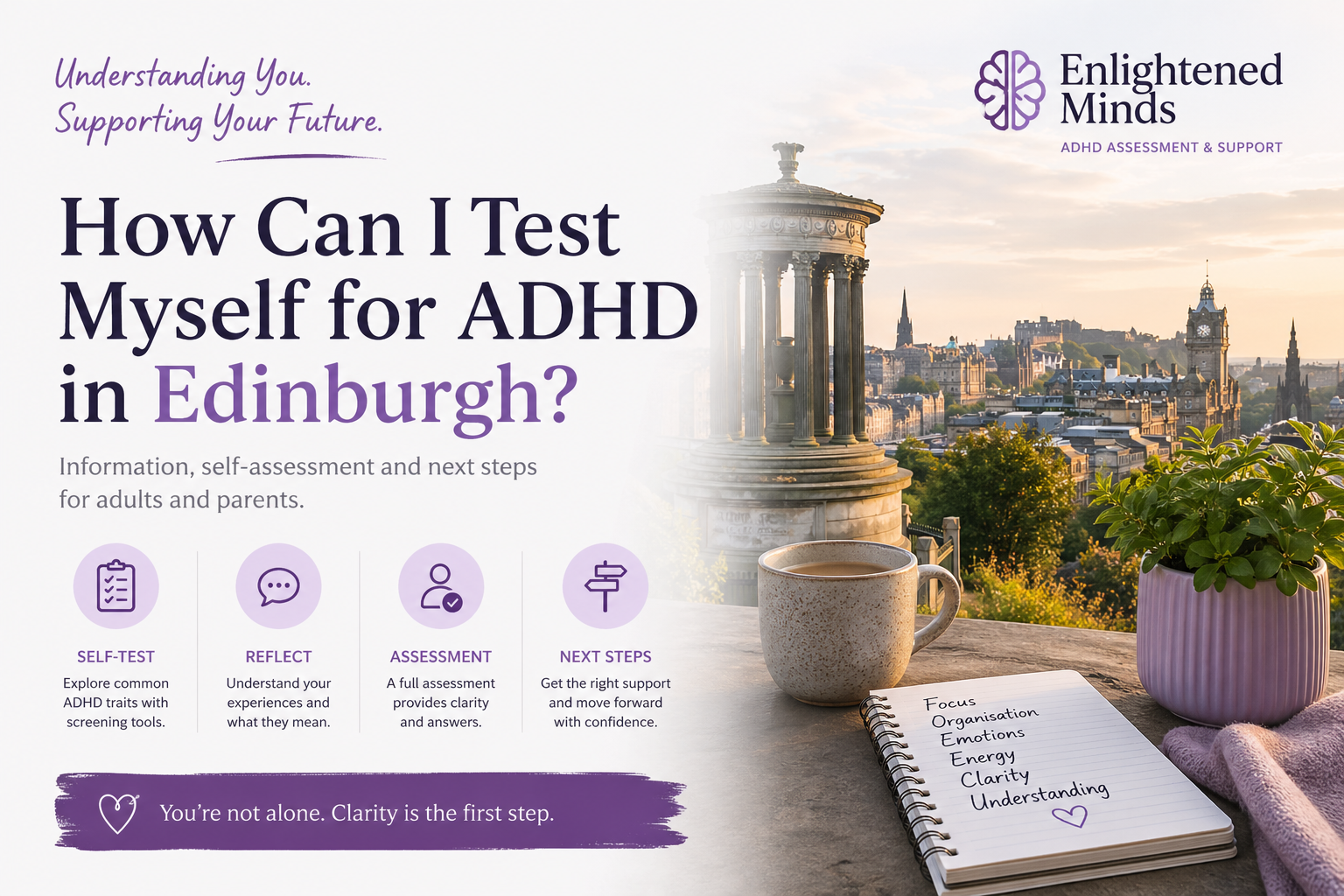
You can use an ADHD self-test or screening questionnaire to explore whether your symptoms may be linked to ADHD, but you cannot formally diagnose yourself. If the results suggest ADHD may be present, the next step is a full ADHD assessment with a qualified professional. In Edinburgh, this may be through your GP and NHS referral route, or through a private ADHD assessment.
There is usually a moment where the question becomes personal.
You may recognise patterns in yourself, or someone close to you may have gently pointed things out. Difficulty focusing, feeling restless, struggling with organisation, emotional overwhelm or constantly feeling behind can all lead you to wonder whether ADHD might be part of the picture.
If you are based in Edinburgh and want to understand yourself more clearly, an ADHD self-test can be a useful starting point. It will not give you a diagnosis, but it can help you decide whether a full assessment is worth exploring.
Can You Self-Test for ADHD?
You cannot formally diagnose yourself with ADHD, but you can begin the process by using screening tools.
Online ADHD questionnaires are designed to help you reflect on common traits such as attention, focus, impulsivity, restlessness, organisation and emotional regulation. They can give you an indication of whether ADHD may be worth looking into further.
For many people, this is where the journey begins. These tools are not a diagnosis, but they can be a helpful starting point. You may also find interactive tools helpful, as they can highlight patterns linked to stress, anxiety, and everyday behaviours.
What Happens After a Self-Test?
If a screening tool suggests ADHD may be present, the next step is a full assessment.
In Edinburgh, you typically have two options. You can speak to your GP and request a referral into local NHS services, or you can explore a private ADHD assessment for a more direct route.
Both approaches aim to do the same thing, understand your experiences in depth and determine whether ADHD is the right explanation.
What Does a Proper ADHD Assessment Involve?
A full ADHD assessment goes beyond a checklist.
It looks at your history, how you function day to day, and how your experiences have developed over time. This may include education, work, relationships, emotional wellbeing, childhood patterns and current challenges.
The goal is not to label you quickly. It is to build a clear, accurate picture.
Sometimes ADHD is confirmed. Sometimes it is not. Both outcomes are useful because they help guide the right next step.
Why People in Edinburgh Look for ADHD Self-Tests First
There is a practical reason this question comes up so often.
Many people want to explore things privately before speaking to a GP or booking an assessment. Others are unsure whether what they are experiencing is “serious enough” to take further.
A self-test can feel like a low-pressure way to begin.
It allows you to reflect without committing to a full assessment straight away.
For Adults and Parents, It Can Look Different
Adults often look for ADHD self-tests after years of managing things quietly, masking difficulties or assuming they simply needed to try harder.
For parents, the question is usually about their child. You might notice focus issues, emotional reactions, impulsivity, forgetfulness or challenges at school, and want a clearer way to understand what is going on before taking the next step.
In both cases, the intention is the same.
To understand, not to guess.
Final Thoughts, From Me to You
If you are wondering whether ADHD may explain what you or your child are experiencing, using a self-test can be a helpful first step.
It gives you something to reflect on, but it should not be treated as a final answer.
Real clarity comes from a proper assessment, where your experiences are understood in full.
Whether you choose to go through your GP or take a more direct route, the goal remains the same, understanding how your mind works and what support might help you move forward.